Guide
Potting mix recipe for vegetables in containers
A good homemade potting mix for vegetables is two parts peat moss, two parts compost and one part vermiculite, with a slow-release fertilizer stirred in before planting. Virginia Cooperative Extension uses equal parts peat, garden loam and coarse sand or perlite, and the University of Maryland grows vegetables in compost and bagged soilless mix half and half.
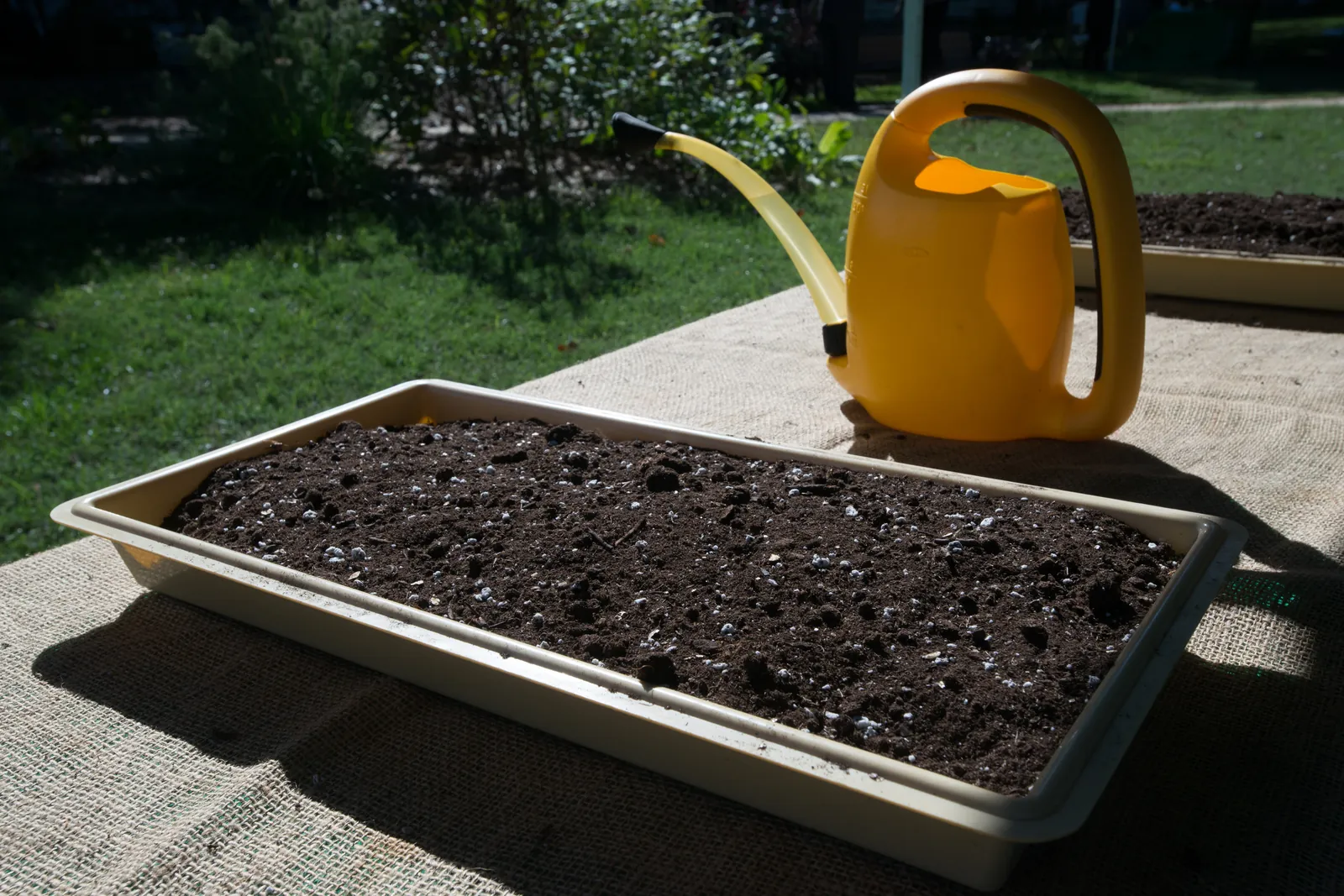
Three potting mix recipes for container vegetables
All parts are by volume, so a bucket, a coffee can or a gallon jug works as the measure as long as you use the same one throughout.
| Recipe | Parts by volume | Also add | Source |
|---|---|---|---|
| Peat and compost | 2 peat moss, 2 compost, 1 vermiculite | All-purpose slow-release fertilizer just before planting | Ask Extension answer, 2024 |
| Soil-based | 1 peat moss, 1 garden loam, 1 clean coarse builder's sand or perlite | Slow-release 14-14-14 by container size; lime if needed to bring pH to about 6.5 | Virginia Cooperative Extension |
| Half and half | 1 bagged soilless mix, 1 compost | Fertilizer through the season | University of Maryland Extension |
Maryland lists two more mixes that work for vegetables, 100% compost and 100% soilless mix, so the half-and-half row is the middle of a range. On compost alone, Maryland says vegetables, herbs and flowers can be grown in 100% compost or leaf mold, and Baltimore City community gardeners have done it for decades.
The Ask Extension answer behind the first row adds one check when you buy the compost: the bag should say compost on the label.
What each ingredient does
The University of Maryland gives a potting mix three jobs. It supplies the roots with nutrients, air and water, leaves room for the roots to grow, and holds the plant up. Every ingredient below covers part of that.
| Ingredient | What it adds | Watch for |
|---|---|---|
| Sphagnum peat moss | Holds water better than compost (Maryland) | Very few nutrients; acidic, so Cornell's peat mixes add dolomitic lime (Clemson) |
| Coconut coir | A popular, lower-cost alternative to peat that Clemson calls more sustainable | Rinse it well before use to avoid salt problems (Clemson) |
| Compost | All the major and minor nutrients plants need (Maryland) | Releases them slowly, usually not enough for a whole season; often above pH 7 (Maryland) |
| Perlite | Drainage, at much less weight than sand (LSU AgCenter) | Nothing flagged by these sources |
| Vermiculite | Aeration, water holding and some nutrients (LSU AgCenter) | Cornell's mixes call for the No. 2 grade (Clemson) |
| Coarse builder's sand | Porosity from its large particles, and it is cheap (Maryland) | Heavy; never play sand (Maryland) |
| Garden loam | The root support Virginia finds missing in peat-lite mixes | Clay holds too much water when wet and pulls away from the pot when dry (Virginia Cooperative Extension) |
Maryland also lists what to leave out of a vegetable pot. Bark fines and wood mulch are high in carbon and low in nutrients, and bagged products sold as topsoil, planting soil or planting mix vary a great deal. It says to avoid any that contain sedge peat, feel heavy or gritty, have very fine particles or look clumped.
Potting mix batch calculator
Enter the pots you need to fill and pick a recipe. The calculator splits the total volume into parts and gives each ingredient in gallons, with quarts and cubic feet for the bag sizes they are usually sold in.
The total uses the full pot size. Virginia fills containers to within 1 to 2 inches of the top, so a batch this size leaves a little over for topping up.
Soilless or soil-based: where the sources disagree
Virginia and Maryland split on the lightest mixes. Virginia Cooperative Extension calls peat-lite mixes generally too light for container vegetables: they give the roots too little support, and in a light container a strong wind can tip the plant over. Virginia adds that soilless mixes are sterile and carry few nutrients, so any fertilizer you add has to include trace elements. Maryland calls commercial soilless mixes an excellent choice for containers and lists 100% soilless mix among its vegetable recipes.
On a balcony we side with Maryland, for the reason in our balcony weight limits guide: every pot adds to a load the floor has to carry. Virginia's recipe adds weight with loam, and more again if you choose sand over perlite. Wind matters most for a tall tomato or a trellised cucumber in a plastic pot. A heavier pot, a stake tied to a fixed rail, or a spot near the wall deals with that without putting soil into every container. The container soil weight chart has the wet and dry figures if you want to compare a soil-based batch with a peat one.
Garden soil on its own: the usual mistake
Maryland, Virginia and Clemson all warn against filling pots straight from the garden. Maryland says garden soil is too dense for good air and water movement in a container and can drown roots, especially in shallow pots, and limits topsoil to very large containers at 5 to 10% of the volume. Clemson's HGIC adds that garden soil carries too many bacteria for containers and has to be pasteurized before use, in the oven until the coolest spot reaches 180°F for 30 minutes, then amended with bark, peat, perlite or sand.
Virginia's recipe is the one exception, and it uses garden loam as only a third of the mix. Last season's potting mix makes a better base than garden soil, as long as the crop that grew in it was healthy; the steps for reusing potting soil cover that.
Lime, pH and fertilizer
Maryland puts the best range for vegetables at pH 5.5 to 7.0, and says bagged soilless mixes run about 6.2. Peat is acidic, which is why Cornell's peat mixes add dolomitic lime: the Cornell foliage plant mix that Clemson adapts for home use puts 8 tablespoons of ground dolomitic lime in each bushel, half of which is peat. That recipe is for houseplants, so take it as a sense of scale. Virginia limes its vegetable mix to about pH 6.5 and recommends a soil test. Compost often reads above 7.0, and Maryland says research shows no benefit in lowering it, because the nutrients in compost stay available across a wide pH range.
Fertilizer is the part a homemade mix runs out of first. Virginia says a mix with fertilizer added feeds the plants for eight to ten weeks, and Maryland that compost alone usually isn't enough for a whole season. The schedule after that is in container fertilizer basics.
Maryland notes that soilless mixes tend to repel water, and works water in by hand, wearing gloves, until the mix is thoroughly wet. Virginia wets peat before it goes into the container for the same reason.
Frequently asked
Two parts peat moss, two parts compost and one part vermiculite, with an all-purpose slow-release fertilizer mixed in before planting, is the recipe an Ask Extension expert gave in 2024. University of Maryland Extension also grows vegetables in a 50:50 blend of bagged soilless mix and compost.
Virginia Cooperative Extension uses equal parts peat moss, garden loam and coarse sand or perlite, plus a slow-release 14-14-14 fertilizer and lime to about pH 6.5. For a lighter balcony mix, University of Maryland Extension uses soilless mix and compost one to one.
Yes. University of Maryland Extension lists 100% compost as a working mix for container vegetables and notes that Baltimore City community gardeners have grown in it for decades. You will still need to fertilize, because compost releases its nutrients slowly.
Not on its own. University of Maryland Extension says garden soil is too dense for containers and can drown roots, and limits topsoil to 5 to 10% of very large containers. Virginia Cooperative Extension uses garden loam as one third of a mix with peat and sand or perlite.