Guide
Watering schedule for a tiered planter
The frame has no reservoir or pump. Water goes in at the top and moves down through the tiers on its own, which changes how and when you should water compared to a single flat bed.
How water moves through the frame
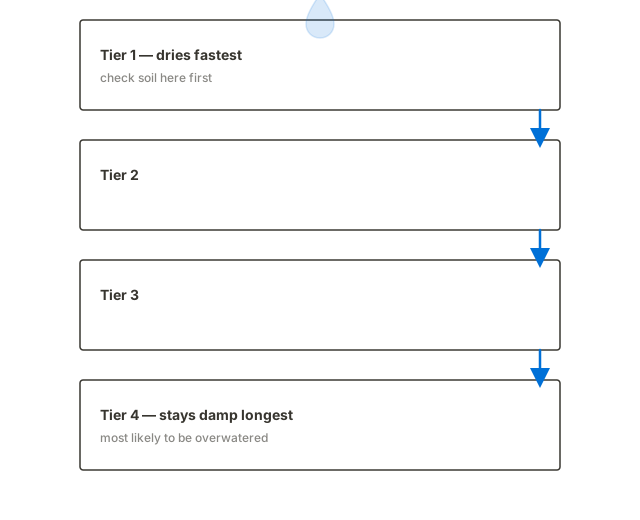
Each tray drains into the tray below through built-in channels, so watering the top tier also gives the tiers underneath a share of that water, though less of it and with a delay. In practice this means the top tier dries out fastest and the bottom tier stays damp longest, which lines up with the plants suited to each: full-sun greens on top that want more frequent water, and shade-tolerant root vegetables on the bottom that tolerate staying moist.
How often to water
Check the top inch or two of soil in the top tier before watering rather than watering on a fixed schedule. If it's dry at that depth, water; if it's still damp, wait. As a starting point:
- Warm, dry weather: most tiered planters need water every one to two days.
- Mild spring or fall weather: every three to four days is usually enough.
- Cool weather or an indoor spot out of direct sun: once a week can be enough, since evaporation slows down.
Water in the morning where possible. It gives leaves time to dry before evening, which cuts down on the fungal problems that come from foliage staying wet overnight.
Why this doesn't follow a weekly total
An in-ground vegetable bed is usually managed against a weekly water budget: most common garden vegetables need roughly 1 to 2 inches of water a week total, including rain, with thirsty crops like sweet corn running closer to 2 to 5.5 inches and lighter feeders like radishes closer to 0.5 to 1 inch. A tiered planter's trays hold nowhere near the soil volume of a bed that size, so they can't bank a week's worth of water the way a foot of garden soil can — which is why this page's guidance above is built around checking rather than a weekly total. The same logic shows up in container-growing guidance generally: a small container in hot, windy weather can need water once or twice a day, while a large container in mild weather may only need it once or twice a week, and the way to tell which situation you're in is to check the mix, not the calendar.
Signs you're watering too much or too little
- Overwatered: yellowing lower leaves, soil that stays soggy a day after watering, or a sour smell from the bottom tier's drainage.
- Underwatered: leaves wilting during the heat of the day but not recovering by evening, and soil pulling away from the edges of the tray.
The bottom tier is the one most likely to end up overwatered, since it collects runoff from three tiers above it. If the bottom tier's soil is consistently wet even when the top tier is dry, water less often rather than more, and plant that tier with things that tolerate consistently moist soil, such as radishes, rather than anything that wants to dry out between waterings.