The Vertical Grow System stacks four planting tiers onto one frame, laid out the way a square-foot garden bed is planned: one crop per square, nine squares per tier.
Get in touchBuilt for balconies, patios, and small courtyards.
Product
Four planting tiers lock onto a single frame that fits a 3-by-3-foot patch of balcony, patio, or courtyard.
A balcony gives you floor area and nothing else. The frame takes that nine square feet of floor and turns it into four planting levels — thirty-six one-foot squares in total — without asking you to drill into a wall or hang anything off a railing.
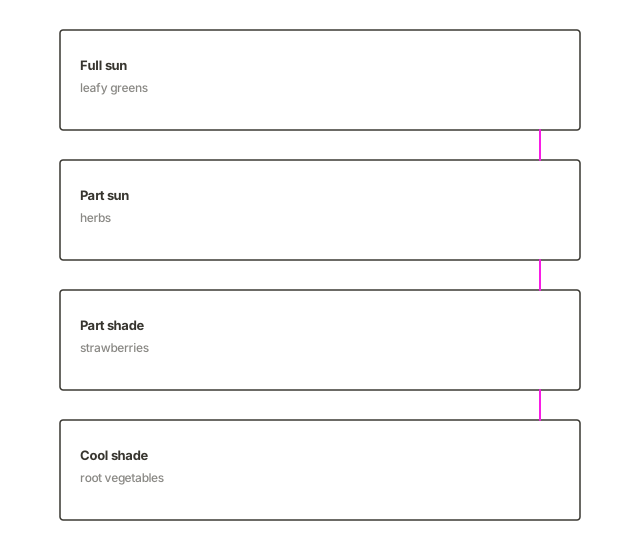
Stacking has one unavoidable consequence: each tier shades the one below it. Rather than fight that, the frame uses it. The tiers step down through the light classes gardeners already plan around — full sun, part sun, part shade — so each level suits a different group of crops instead of all four competing for the same conditions.
Everything else is deliberately ordinary. The footprint is nine one-foot squares, the same unit used to plan a raised bed, so the spacing counts, the sowing intervals, and the pot-depth minimums you already know carry over unchanged. What fits in the ground fits on the frame.
Each tier catches a different amount of sun, so the frame sorts your crops for you: greens and one full-sun crop up top, herbs and strawberries in the middle, quick roots down where the soil stays cool.
The footprint is nine one-foot squares, the same unit gardeners already use to plan a raised bed, so published spacing and succession charts apply without conversion.
Tiers
Light drops by roughly one class per level. The hour figures below are the standard definitions of each label, measured as direct sun on the leaves and added up across the day.
| Tier | Light class | Direct sun | What it suits |
|---|---|---|---|
| 1 — top | Full sun | 6+ hours | Lettuce heads, chard, and the one fruiting crop the frame can carry: a determinate tomato or a pepper |
| 2 | Part sun | 4–6 hours | Basil, parsley, cilantro, and the root crops that want 4 hours to size up properly |
| 3 | Part shade | 2–4 hours | Kale, spinach, arugula, mint, strawberries — leaf crops stay productive on the least light; strawberries fruit less than they would higher up |
| 4 — bottom | Cool shade | Under 2 hours | Coolest, dampest soil in the frame. Radishes in an open placement; in a wall-backed spot, treat it as storage |
The honest caveat: under two hours of direct light almost nothing edible finishes. If the frame sits against a wall or faces north, the bottom tier is a shelf, not a growing level — plan on three productive tiers and put the shade-tolerant greens on the lowest one that still clears two hours. Reflected light off glass and pale walls, which balconies have plenty of, doesn't count toward the hour total but does raise the floor of what part-shade crops manage.
Spacing
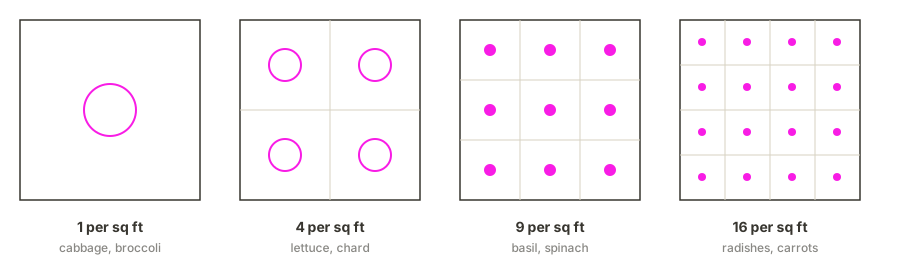
Square-foot gardening replaces row spacing with a fixed count per one-foot square. It isn't always one plant.
These counts assume plants touching their neighbors at maturity, which works because container and raised-bed soil is never compacted by foot traffic. They deliberately run tighter than the spacing printed on a commercial seed packet, which is written for row gardening.
Where the four-class shorthand and a crop-specific chart disagree — basil and parsley come out at 4 per square rather than 9, beets at 9 rather than 16 — use the crop-specific number.
How it works
The four trays lock onto a single frame without tools. Assemble it where it will stand — a loaded frame is not something you want to carry through a doorway.
Standard potting mix only. Each tray drains into the tray below through built-in channels, so the whole stack shares one watering path.
Work down from the top tier, matching each crop to the light that level actually gets, then re-sow the fast crops on their succession interval.
Care
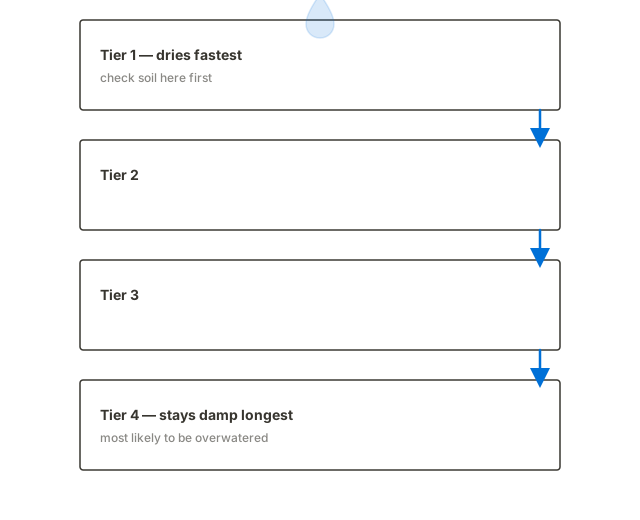
There is no reservoir and no pump. Water goes in at the top and moves down through the tiers on its own.
Watering the top tier gives every tier below it a share — less of it, and later. That's why the top tier dries out fastest and the bottom stays damp longest, and it lines up with what each level is planted with.
Check the top inch or two of soil in the top tier instead of watering on a schedule. If it's dry at that depth, water; if it's damp, wait. As a starting point:
Water in the morning so the leaves dry before evening — wet foliage overnight is what most container fungal problems trace back to. Don't manage the frame against a weekly inch total the way you would an in-ground bed: trays hold nowhere near the soil volume needed to bank a week of water.
Safety
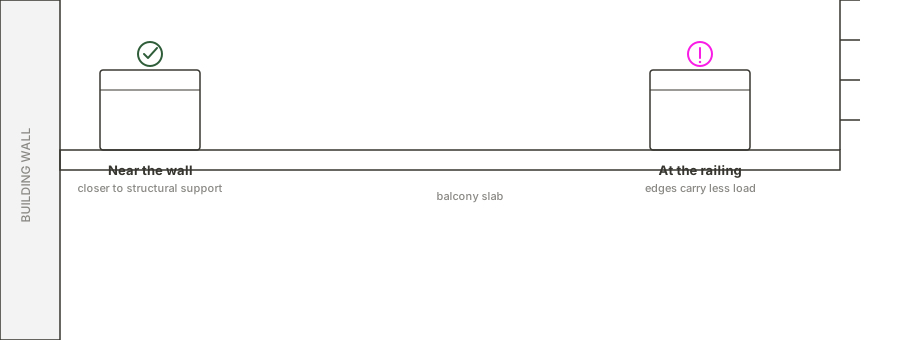
Every balcony-planter FAQ says "check your load limit". Here is what that limit usually is, and which weight you should actually be adding up.
US residential codes set a minimum live load for balconies and decks. Smaller residential buildings are commonly engineered around 40 pounds per square foot, some codes call for 60 psf on balconies specifically, and taller or higher-occupancy buildings can be built to 100 psf. Live load covers everything temporary on the balcony at once — people, furniture, and planters together, not the planter on its own. Your building's permit or property manager is the only reliable source for your number.
Then weigh the soil wet, because that's the state it spends most of its life in:
Multiply your tray volume in cubic feet by the saturated figure, add the frame and mature plants, and compare that against the load your balcony carries — with the furniture and the people already on it.
Balcony load limits in full → · Soil weight per container size →
Specs
Guides
Written and reviewed by our own growers, with the sources named in each piece.
Planting
How many plants of each size class actually fit per square, applied to a 9-square, 4-tier frame.
Planting
Full sun, part sun, and part shade in actual hours, crop by crop, and what still produces on a north-facing balcony.
Planting
Minimum pot depth, recommended volume, and plants per pot for 20 common vegetables and herbs.
Planting
Seed-to-harvest times from seed and from transplant, with succession-sowing intervals to keep harvests continuous.
Planting
Which pairings have research behind them, which are folklore, and which crops actually share a container.
Care
How water moves through a drain-linked frame, how often to check it, and the signs you're over- or under-watering.
Care
What N-P-K numbers mean, how often to feed container vegetables, and the signs of over- and under-fertilizing.
Safety
What balconies are typically built to hold, why wet soil changes the number, and where to place the weight.
Safety
What potting mix, garden soil, and gravel weigh per gallon, dry and watered, with worked examples per pot size.
FAQ
The top tier does best with at least six hours of direct sun a day — the standard definition of full sun. Each tier below gets roughly one light class less, which is what makes the part-sun and part-shade crops worth planting there rather than a second round of the same greens.
Below about two hours of direct light almost nothing edible finishes, so a frame in deep shade won't produce however it's planted. See the sunlight requirements chart for per-crop minimums.
Yes — the frame spreads its weight across four feet. What to check first is your balcony's live load limit: US residential codes commonly engineer smaller buildings around 40 psf, some call for 60 psf on balconies, and taller buildings can be built to 100 psf. That allowance covers people and furniture at the same time, not the planter alone.
Weigh the soil wet, not dry. Peat- or coir-based potting mix runs about 10–15 lb per cubic foot dry and 40–60 lb saturated; mineral garden topsoil runs 100–120 lb per cubic foot wet, which is why it stays off balconies. Multiply your tray volume in cubic feet by the saturated figure, then add the frame and the plants. Worked examples per container size are in the soil weight guide.
One for extra-large crops like cabbage and peppers, 4 for large crops like leaf lettuce and chard, 9 for medium crops like spinach and beets, 16 for small crops like radishes and carrots. Where the four-class shorthand and a crop-specific chart disagree, use the crop-specific count — see the square-foot planting chart.
Check the top inch or two of soil in the top tier rather than watering on a fixed schedule: every one to two days in warm dry weather, every three to four in mild weather, about weekly in a cool or sheltered spot. Water in the morning so the leaves dry before evening.
Leafy greens and one full-sun crop on the top tier, herbs and strawberries on the middle tiers, and quick root vegetables like radishes on the bottom tier, where the soil stays coolest and dampest. Roots size up more slowly on the lower tiers than they would in full sun — a trade you make knowingly, not a fault of the crop.
About
Invictus Urban Farms designs growing systems for people without a yard. The Vertical Grow System is the first product: built for balconies and patios, where space is the limit, not sunlight.
The guides are the other half of the work. A frame is easy to sell and hard to use well, so the charts we needed ourselves — spacing, sun hours, wet soil weight, feeding rates — are published here in full, sourced, and free of the vague "check your local conditions" hedging that makes most of them useless. Written by Moses Emmanuel.